
I was a child in the 1980s and believed in a left-right trade-off between social justice and economic efficiency. At the end of university, where I had dropped Economics for a Politics degree I found it so uninspiring, I went on holiday and read Steinbeck’s The Grapes of Wrath.
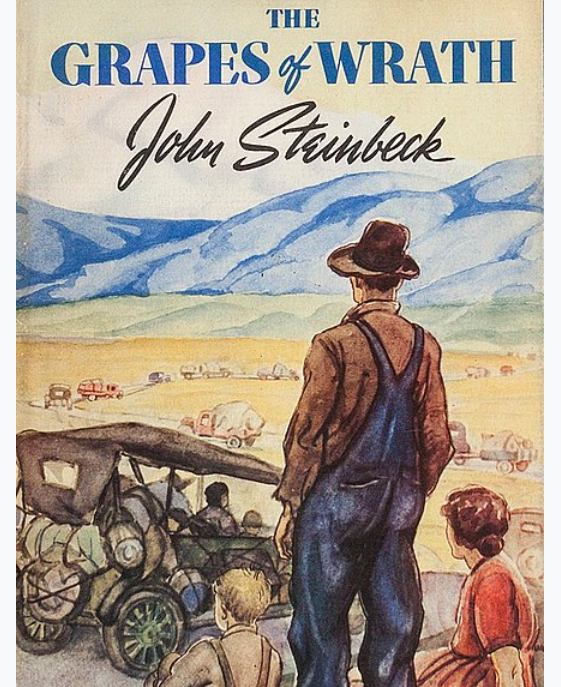
The Joads were lured to California by a bogus promise of well-paid work, as tractors transformed the rural economy and the bank foreclosed on their farm. This made me realise that markets are not always neutral or fair but can be weaponised. The Joads and countless others were used as commodities to create a glut of workers and drive down wages.
I learned my way through various jobs to become an economist in a big bank years before I got an economics degree. I believe this gave me an unusual perspective, and I invite you to judge over coming weeks as I re-examine how supply and demand really works or, next week, why I believe our future depends on the difference between free trade and free markets. There will also be one on transforming public policy that would have saved hundreds of billions in recent years.
We need an economics in which people matter. I favour the narrative approach where we learn from history over positive economics (until the numbers can predict, which would be a game-changer). Writing a novel about economics seems an obvious extension to the narrative approach, allowing for the social context that is too often ignored.

To begin with, I wanted to locate economics within the wider social context. This is what I eventually came up with, showing the fundamental building blocks of society and those with agency to change it (here shown, ironically, boxed in!)
Leave a Reply